

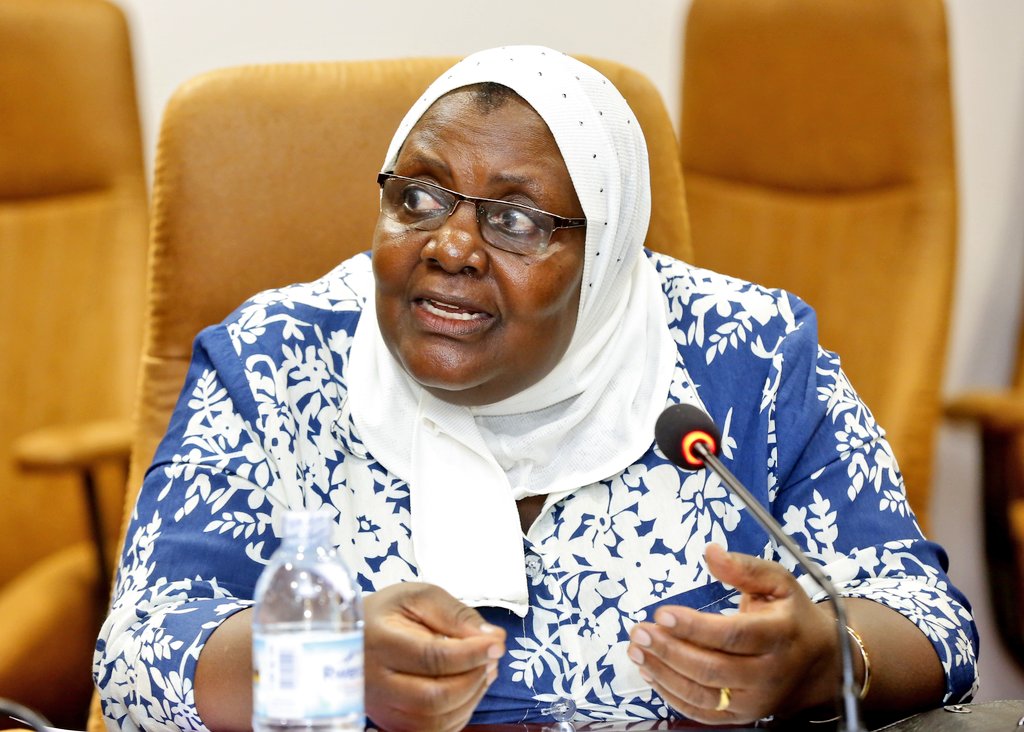
The Equal Opportunities Commission (EOC) has reported modest but notable improvement in the compliance of Uganda’s national budget with gender and equity requirements, signaling gradual progress in the country’s push toward inclusive public finance management.
The findings were revealed during the official submission of the compliance assessment report for Financial Year 2026/27 to the Minister of Finance, Matia Kasaija, by the EOC Chairperson, Safia Nalule Juuko.
According to the report, overall compliance with gender and equity requirements rose to 70 percent, up from 68 percent in the previous assessment period. The national budget itself scored 67 percent, while ministerial policy statements across votes averaged 70 percent, reflecting improved alignment by Ministries, Departments, and Agencies (MDAs).
Juuko noted that while the progress is encouraging, compliance levels remain moderate, underscoring the need for sustained reforms to ensure that planning and budgeting processes adequately respond to the needs of all population segments.
“Despite the improvement, there are still critical gaps that must be addressed to achieve full compliance and equitable resource allocation,” she said.
The report highlights several ongoing challenges. Some government entities continue to inadequately address regional disparities in their plans and budgets, undermining efforts to promote balanced socio-economic development across the country.
Non-adherence to established reservation schemes by MDAs also remains a concern. These schemes are designed to ensure that marginalized and vulnerable groups—including women, youth, persons with disabilities, and underserved regions—are meaningfully integrated into national development frameworks.
The EOC emphasized that failure to fully implement these provisions weakens the broader objective of achieving equal opportunities and inclusive growth.
Receiving the report, Kasaija described the Commission’s work as a critical accountability tool within Uganda’s public financial management framework. He noted that the assessment aligns with provisions under the Public Finance Management Act, which mandates the integration of gender and equity considerations in the budgeting process.
“The work undertaken by the Commission in assessing the gender and equity responsiveness of the national budget is an important accountability mechanism,” Kasaija said.
He reaffirmed government’s commitment to ensuring that public expenditure decisions are both inclusive and equitable, particularly in addressing long-standing structural imbalances in the economy.
“Government remains firmly committed to ensuring that public resources are allocated in a manner that promotes inclusive growth and addresses structural inequalities,” he added.
The latest findings come at a time when Uganda continues to prioritize inclusive development as a central pillar of its economic strategy, with increasing emphasis on equitable service delivery and targeted interventions for vulnerable communities.
Analysts note that while incremental gains in compliance are a positive signal, achieving transformative impact will require stronger enforcement mechanisms, improved capacity within MDAs, and enhanced monitoring to ensure that policy commitments translate into tangible outcomes on the ground.
As Uganda moves into the FY 2026/27 implementation cycle, the EOC’s report is expected to inform policy adjustments and guide stakeholders in strengthening the integration of gender and equity considerations across all sectors of the economy.
